
A Lease Written for the Landlord Costs You for Years
Most commercial leases are written from the landlord’s side of the table, and the terms you don’t catch now follow you for the full length of the lease.
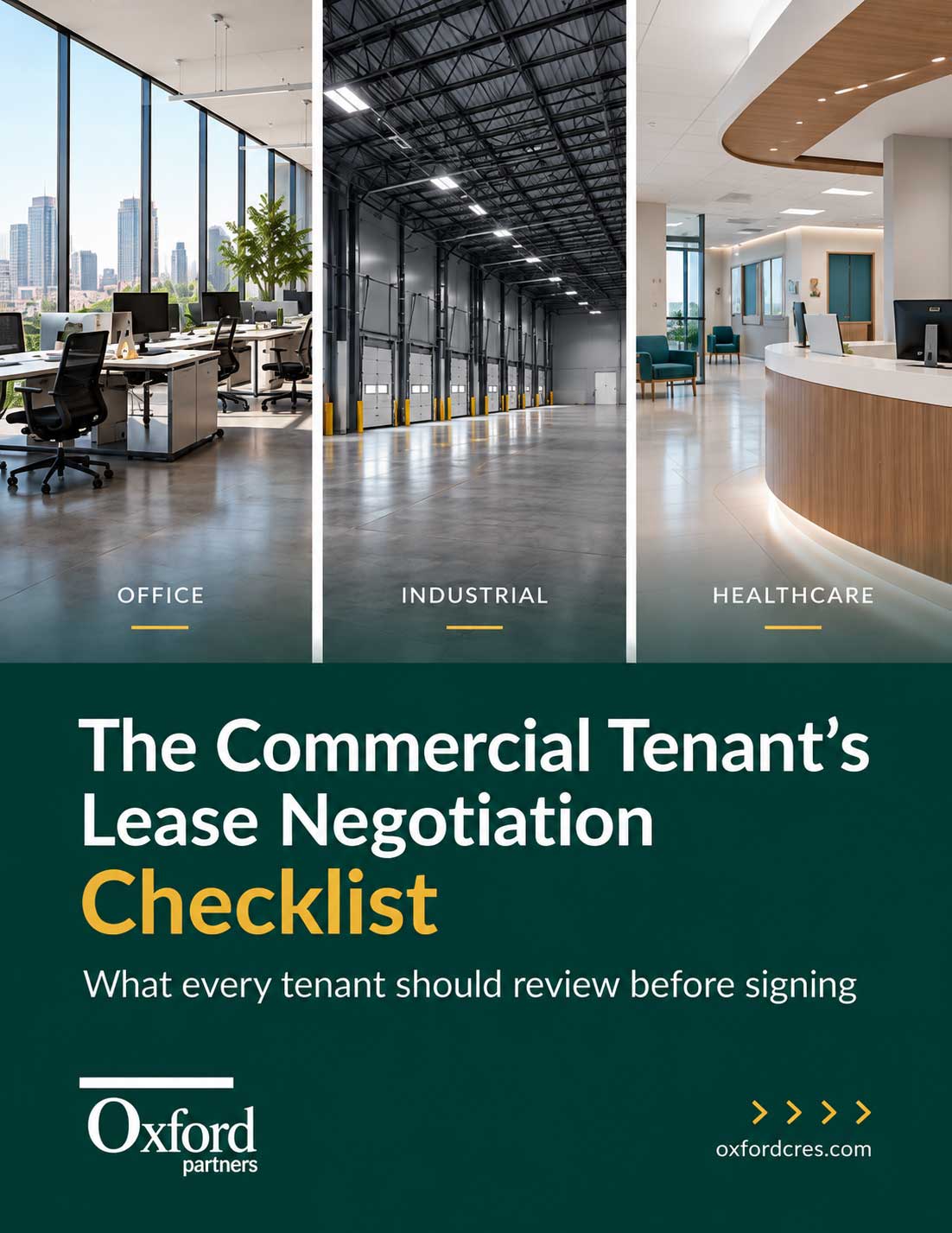
Get instant access to the checklist
Enter your name and email, and the full guide lands in your inbox right away.
The Problem
A commercial lease favors the party who wrote it, and in almost every case, that party is the landlord. Standard language on commencement dates, operating expenses, and default remedies is drafted to protect the building owner first, with the tenant’s interests addressed only where required. Most tenants sign without knowing which of those terms are negotiable, and the gap between a lease you accepted and a lease you negotiated shows up every month for years.
Keep in mind a lease agreement is most often looked at during times of disagreement!
What’s inside
This checklist walks through 32 provisions organized into six areas, each with a plain-language explanation of what to watch for and a starting point for pushing back.
- Premises and buildout: condition of the space, commencement timing, and construction terms
- Financial terms: operating expenses, insurance, and square footage calculations
- Operations during the term: maintenance, building systems, and access
- Risk and compliance: liability, casualty, and environmental exposure
- Flexibility and exit: subleasing, renewal rights, and early termination
- Default and enforcement: cure periods and protection if the landlord doesn’t perform
Why Oxford Partners
Every provision in this checklist represents a point where a standard lease favors the landlord by default. Reviewing all of it while running a business leaves real money and real flexibility on the table, and a downloaded PDF only gets a tenant so far without someone advocating for their specific position at the negotiating table.
Oxford Partners works exclusively for tenants, buyers, and owner-occupants. We never represent landlords, which removes the conflict of interest built into how most commercial real estate brokers operate. A broker who works both sides of the market has a standing incentive to keep landlords satisfied across every deal, and that incentive shapes the terms a tenant ends up with.
An experienced tenant rep brings comparable lease data, a track record of what landlords will move on, and leverage built from negotiating hundreds of leases rather than one. The checklist covers a fraction of what a full negotiation actually addresses, and the language in a signed lease looks different once someone negotiates specifically for the tenant’s position.
Ready to Get Started?
Talk to a team that works only for tenants, starting with the checklist.